Possession of a Controlled Substance in Miami
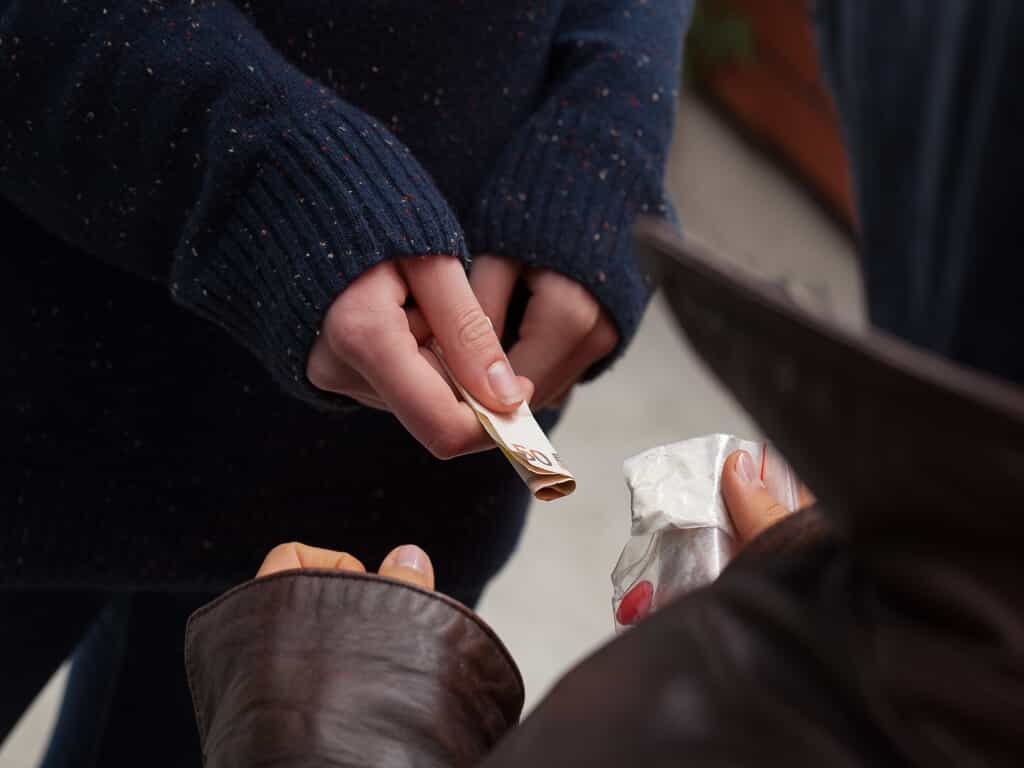
The Florida Comprehensive Drug Abuse Prevention and Control Act (Florida Statutes, Title XLVI, Chapter 893) proclaims that "a person may not sell, manufacture, or deliver, or possess with intent to sell, manufacture, or deliver, a controlled substance." Florida law heavily regulates the possession or use of controlled substances listed in the law. It is illegal to possess, cultivate, sell, manufacture, deliver, distribute, or traffic in these substances.
Local law enforcement agencies in Miami-Dade County work to locate and dismantle mid-level and upper-level narcotics organizations that operate within the City of Miami through the use of undercover officers, complicated sting operations, and confidential informants. In the process, the officers often come into contact with and arrest individuals that simply use the drugs without any connection to organized crime. The undercover sting operations are often carried out by law enforcement officers within the Miami Police Department's Special Investigations Unit for Narcotics.
Many possession arrests in Miami start with a traffic stop, a street encounter, or a call for service that has nothing to do with drugs. What begins as an investigation of loud music, lo itering, or a minor traffic infraction can quickly turn into a drug case if officers claim to smell marijuana or see contraband in plain view. Understanding how the encounter started is critical, because it can determine whether the court will later decide that the police lawfully detained you and searched your person, vehicle, or home.
Understanding the Drug Possession Process in Miami-Dade County
When you are arrested for possession of a controlled substance in Miami-Dade County, your case usually moves through several stages in the Eleventh Judicial Circuit. Knowing what happens at each step can make the situation less overwhelming and help you decide when to involve a drug possession attorney. While every case is different, most people will face an arrest, a first appearance in front of a judge, formal charges, and one or more court dates where important decisions must be made about pleas, motions, or trial.
After an arrest by agencies such as the Miami-Dade Police Department or City of Miami Police Department, you are typically taken to a local jail and then brought before a judge at the Richard E. Gerstein Justice Building or another Miami-Dade courthouse for a bond hearing or first appearance. At that hearing, the judge will consider the arrest affidavit, set bond and conditions of release, and schedule your next court date. This early stage is often where a lawyer can address release conditions, advise you about what not to say, and start preserving evidence such as video footage or witness information that might not be available later.
In the weeks that follow, the State Attorney’s Office decides what formal charges to file, and your case is assigned to a division judge. During this time, your attorney can begin reviewing discovery, evaluating whether motions to suppress or dismiss are appropriate, and discussing possible diversion options like Miami-Dade County Drug Court. By understanding the timeline and who is involved at each point, you are better equipped to participate in your defense and make informed choices about whether to seek a negotiated resolution or contest the charges at trial.
Search & Seizure in Drug Possession Cases
An important issue in drug possession cases is often how the controlled substance, narcotics, or drugs were discovered. If the police did not explicitly follow the laws related to search and seizure, they may have violated the Fourth Amendment to the U.S. Constitution. If so, evidence may be excluded by the court and a reduction or dismissal of charges may result. A qualified criminal defense attorney will be able to review your case for mistakes made by the police or other law enforcement agencies during the arrest, search, discovery, or testing of any controlled substances.
In Miami-Dade County, search and seizure issues frequently arise from vehicle searches, consent searches in high-crime areas, and warrantless entries into homes or apartments. Officers might rely on tips from confidential informants, canine sniffs, or alleged "plain smell" of drugs to justify a search. A careful review of police reports, body camera footage, and any search warrants can reveal whether law enforcement had sufficient legal grounds to detain you, to extend a traffic stop, or to search closed containers such as backpacks or purses. If those steps were not justified, a motion to suppress can be a powerful tool for a drug possession attorney to challenge the State's case.
Penalties for Possession of a Controlled Substance
According to the Florida Statutes, a first-degree felony is punishable in Florida by up to 30 years in prison and a fine of up to $10,000. A second-degree felony is punishable by up to 15 years in prison and a fine of $10,000.
Upon conviction for a third-degree felony for possession of even a small-but-detectable amount of any controlled substance except marijuana, § 893.13(6) of the statutes prescribes a penalty of up to five years in prison and a fine of up to $5,000. Possession of 20 grams or more of marijuana is a third-degree felony; possession of fewer than 20 grams of marijuana is a first-degree misdemeanor.
Other penalties may include:
- Probation
- Community service
- Drug counseling and/or treatment
- Random drug testing
- A two-year driver's license suspension, with a one-year "hard" suspension
In many of these cases, the charges are resolved in drug court or in a regular division for "drug offense probation." Drug offender probation includes a drug evaluation and follow-up treatment, as well as frequent urine testing. More serious charges include possession with the intent to sell and drug trafficking. A felony conviction may also have an adverse impact on certain educational or educational opportunities.
Differences Between Simple Possession and Possession With Intent
Florida law treats simple possession cases differently from situations where the State alleges that someone intended to sell or distribute drugs. Understanding this distinction is important because a possession with intent charge usually carries harsher penalties and can close the door on some diversion programs in Miami-Dade County. Prosecutors and police often look at the quantity of the substance, the way it is packaged, the presence of cash or scales, and any statements that were made to decide which type of charge to file.
In a simple possession case, the focus is generally on whether the State can prove you knowingly had a small amount of a controlled substance for personal use. In a possession with intent case, prosecutors in the Eleventh Judicial Circuit may argue that text messages, surveillance, or the location of the arrest near schools or public housing shows a plan to sell. A drug possession lawyer can analyze those same facts to challenge whether there is enough evidence to support an intent allegation or to argue that the case should be treated as a lower-level possession offense instead.
This difference matters not only for potential jail or prison time, but also for your options in court. In Miami-Dade County Drug Court and other problem-solving divisions, simple possession charges are more likely to qualify for treatment-focused resolutions. By clearly understanding which type of charge you are facing and why the State chose that level, you and your attorney can better evaluate the risks of trial, the strength of the evidence, and whether to pursue negotiations that reduce the charge to a straight possession count when possible.
State Charges vs. Federal Charges
Because controlled substances are regulated by both the federal and state governments, possession of a controlled substance may be prosecuted in either federal or state court. Most low-level drug possession charges are adjudicated in state court. Many state drug possession cases are resolved in the Miami-Dade County Drug Court (MDDC), a diversionary program intended to provide treatment for drug abuse.
In South Florida, federal drug cases are typically filed in the United States District Court for the Southern District of Florida, while state cases are heard in the Eleventh Judicial Circuit in Miami-Dade County. Although simple possession is usually a state offense, federal authorities may get involved if the case is connected to a larger trafficking investigation, occurs at Miami International Airport or a seaport, or involves federal task force officers. The procedures, sentencing exposure, and plea options are very different in federal court, so it is vital to understand early on which system you are facing and to work with counsel who can explain the practical differences.
How a Conviction Can Affect Your Driving Privileges
In addition to the penalties imposed by a judge or jury in a controlled substance possession case, the court is required to alert the state's Department of Highway Safety and Motor Vehicles (DHSMV) of the conviction. The DHSMV will then suspend a convicted person's driving privileges for two years with no chance for a hardship license during the first year of "hard" suspension.
Can a Possession of a Controlled Substance Charge Be Dropped?
Possession of a controlled substance charge in Florida can potentially be dropped or dismissed, but it depends on the specific circumstances of the case.
If the evidence against the accused was obtained illegally, such as an unlawful search and seizure, then the defense may be able to file a motion to suppress the evidence. If the motion is granted, the prosecution may not have sufficient evidence to proceed with the case and may drop the charges.
Another possible way to drop the charges is through a plea bargain. The prosecution may offer a plea deal in which the accused agrees to plead guilty to a lesser charge or to complete a drug treatment program in exchange for the charges being dropped. Additionally, if the prosecution determines that they do not have enough evidence to prove the accused's guilt beyond a reasonable doubt, they may drop the charges. It is important to note that every case differs, and the outcome will depend on the specific details and evidence involved. It is recommended to seek the guidance of an experienced criminal defense attorney for advice on the best course of action.
In Miami-Dade County, options such as pre-trial diversion, pre-trial intervention, and drug court give some people a path to resolve a possession case without a formal conviction. Eligibility will depend on factors like your prior record, the type of substance, and whether there was any allegation of sales or violence. A lawyer who regularly appears in the local criminal courts can help you evaluate whether you qualify for one of these programs, what conditions you would be required to complete, and how successful completion could affect your record in the future.
Exploring Defense Strategies for Drug Possession Charges
When facing drug possession charges, it is crucial to have a strong defense strategy in place. At Hubbs Law, P.A., our experienced Miami drug crime attorneys are well-versed in the various defense strategies that can be employed to fight these charges.
Some common defense strategies for drug possession charges include:
- Challenging the legality of the search and seizure conducted by law enforcement officers
- Questioning the chain of custody of the alleged drugs
- Asserting that the drugs did not belong to the accused and were planted or left behind by someone else
- Arguing that the accused had no knowledge of the presence of the drugs
- Seeking to suppress any evidence that was obtained illegally or in violation of the accused's rights
Our skilled attorneys will thoroughly analyze the details of your case, gather evidence, and develop a personalized defense strategy tailored to your specific circumstances. We will aggressively advocate for your rights and work towards achieving the best possible outcome for your drug possession charges.
In many Miami cases, defending against a possession charge also requires addressing constructive possession theories, where the State claims you had control over drugs found in a shared car, home, or public space. We carefully examine who else had access to the area, whether your fingerprints or DNA are linked to the contraband, and whether your statements to police were voluntary. By challenging weak assumptions about control and knowledge, a drug possession lawyer Miami defendants trust can often narrow the issues for trial or create leverage for a more favorable resolution.
Find a Miami Attorney for Controlled Substance Charges
If you were arrested for possession of drugs, narcotics, or a controlled substance or any other drug charges in Miami or anywhere in Miami-Dade County, you should consider contacting Hubbs Law Firm for a confidential discussion about your case.
At Hubbs Law Firm, the initial consultation is always offered to potential clients at no cost. During the consultation, we will carefully listen to you and your concerns about your case. We will explain your charges, the penalties you may face if convicted in a trial, possible defense strategies, and the options you have before you make a decision about hiring a lawyer. In certain circumstances, a first-time drug, narcotics, or controlled substance offender may be eligible for a pre-trial intervention program, which could result in a dismissal of charges. In some cases, a defendant may be wiser to proceed to trial.
If the search for a controlled substance was not conducted by the book, an experienced Miami drug crimes attorney may be able to negotiate for a reduction in charges or a judge may dismiss the case. The goal of Hubbs Law Firm in every case we accept is to avoid a conviction. We will go to trial if necessary.
When you meet with us about a possession case, we also talk through practical concerns such as how quickly you must appear in court, what conditions of release you might face in Miami-Dade County, and how a pending charge can affect your immigration status or professional license. Our background as former prosecutors and our experience handling both criminal and immigration matters allow us to give you a clear picture of the risks and possible outcomes before you decide how to move forward.
Call us today at (305) 570-4802 or contact us online to schedule an appointment to discuss your charge for possession of a controlled substance.
Additional Resources
Commonly Asked Questions
What Are the Penalties for Possession of a Controlled Substance in South Miami, FL?
Penalties for possession of a controlled substance in Florida depend on the type and amount. Generally, possession is a felony punishable by up to 30 years in prison and $10,000 fine. Possession with intent to sell or distribute carries harsher penalties.
What Types of Drugs Are Considered ‘Controlled Substances’ Under Chapter 893 Florida Statutes?
Chapter 893 lists hundreds of drugs that are considered 'controlled substances,' including prescription medications (e.g., Valium, Xanax, OxyContin) and street drugs (e.g., marijuana, cocaine). Even with a valid prescription, using these narcotics while driving is illegal.
Can I Be Deported From the U.S. If Convicted for an Offense Related to Drug Possession?
Yes - if you are not a United States citizen and you are convicted for an offense related to drug possession you can face deportation from the U.S., unless certain exceptions apply.
Call Hubbs Law, P.A. at (305) 570-4802 to schedule your consultation today, or get in touch with us online using our easy to use online contact form.